A Taste of Corfu, Wrapped in Autumn Sun
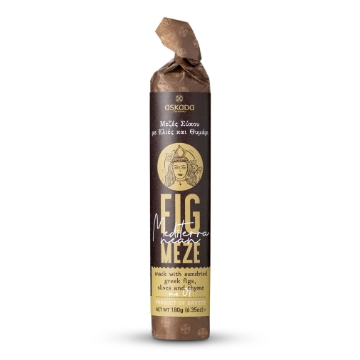
Every September, on the Ionian island of Corfu, fig trees begin to release what they have spent all summer gathering: light, sugar, and the particular sweetness that only Mediterranean heat can coax from fruit. What happens next is a small piece of island ritual. Sykomaida, the traditional Corfiot fig pie, is not baked in an oven — it is made the old way, by patience and sun. After gathering figs, they stay in the hot summer sun to dry and fermented together with grape must, ouzo and spices. It is a method older than refrigeration, older than industrial preserving, born of an island that has always known how to make abundance last through winter.
This particular version carries a twist that could only come from Corfu: instead of the customary ouzo, the paste is layered with the island's most celebrated citrus — kumquat. The result is a fig pie that tastes unmistakably of its birthplace, sweet and spiced, bright and a little wild.
The Fruit That Only Grows Here
Kumquat is an unlikely visitor to Greece. Tiny, golden, and originally from China, it found in Corfu's mild, maritime microclimate the one corner of the Mediterranean where it would truly thrive — nowhere else in Greece grows it with the same character. It became so identified with the island that its liqueur earned Protected Geographical Indication status, a rare official acknowledgment that this fruit and this place belong to each other. The traditional Corfu liqueur is produced by extracting the rare citrus fruit kumquat into alcohol, with the traditional way that is carried from one generation to the other for so many years, following the local recipe which is certified with Protected Geographical Indication.
In this fig pie, kumquat is not a decorative afterthought. The ingredient list is short and honest — fig, anise, fennel seed, kumquat fruit, and grape must — and the citrus makes up a meaningful ten percent of the paste, enough to genuinely reshape the flavour rather than merely perfume it. Where classic sykomaida leans on the warm anise notes of ouzo, this version trades some of that warmth for the kumquat's tart, marmalade-like snap, cutting through the density of the dried fig with something closer to sunlight than spirit.
How the Flavour Is Built
The process itself explains the taste. Figs are laid out to dry under the full force of the Ionian summer, concentrating their natural sugars into something denser and more intense than any fresh fig could offer. Then comes fermentation with grape must — the same unfiltered grape juice used in traditional Greek petimezi — which lends the paste a faint winey depth long before any spirit is added. Fennel seeds and black pepper are uniquely combined in the mixture, giving freshness and intensity to the sweetness of the figs. Anise threads through quietly in the background, an echo of the region's distilling heritage even without the ouzo itself.
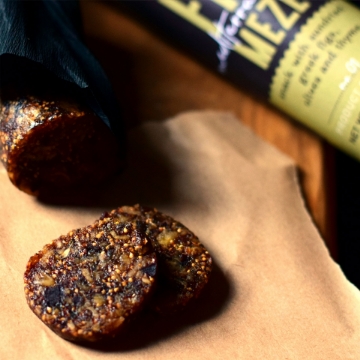
What emerges is a thick, dark, almost jammy paste — dense enough to slice, rich enough to need only a small amount per serving, and layered with a complexity that unfolds slowly: first the deep sweetness of sun-dried fig, then the gentle anise and fennel warmth, and finally the kumquat's citrus lift arriving at the very end, like a last, bright word in a long sentence.
A Dish Built for the Table, Not the Dessert Cart
This is important to understand before tasting it: Corfiot fig pie was never meant to be a sweet on its own. The addition of ouzo transforms this dessert into an ideal appetizer, in Greek called meze, with ouzo and tsipouro. The kumquat version keeps that same instinct — it is a savoury-sweet companion, not a dessert competing for the spotlight.
- With spirits: a thin slice alongside a chilled glass of tsipouro, ouzo, grappa, or brandy turns a simple drink into a proper Greek meze moment.
- With cheese: pair it with soft goat cheese and cured meats — the sharp citrus and gentle anise cut beautifully through the richness of both.
- In salads: Lazaris' own kitchen suggests a version with rocket, grape tomatoes and fresh kumquat wedges, the pie crumbled through and finished with olive oil and a squeeze of the fruit's juice — a genuinely restaurant-worthy idea for a weeknight table.
- In pastry: pastry chefs working with the brand have folded it into semifreddo and tart fillings, where its density and citrus edge behave almost like a spiced fruit conserve with real backbone.
Small Batches, Family Hands
Behind the label is a family story rather than a factory one. The history of Lazaris Distillery & Artisan Sweets begins in 2005 by Konstantinos Lazaris, inspired by the kumquat fruit, and both he and his team passionately continue the island's culinary history. The Lazaris name in Corfu stretches back further still — a household that had already spent generations moving beverages and flavour around the island before turning its own attention to reviving the recipes it grew up with. The products are handmade, produced in small batches and steeped in Corfiot history and sophistication, with skilled artisans constantly innovating and experimenting with new delicious combinations based on traditional Ionian recipes.
Visitors to the island can watch this fig pie take shape in person: the tour of the confectionery facility starts among the kumquat spoon sweet, mandola, nougat, and traditional fig pie known as "sykomaida", taking guests on a trip into the culinary history of Corfu. For those of us tasting it far from the Ionian Sea, the jar is the next best thing to standing in that workshop.
Good to Know Before Opening the Jar
The paste is thick, deeply pigmented and naturally sticky — this is concentrated dried fruit, not a smooth spread, so a sharp knife or small spoon works better than a butter knife. It keeps its character best stored cool and dry, away from direct light, and once opened is happiest finished within a reasonable stretch of weeks rather than lingering indefinitely in the back of a cupboard. As with many artisan Mediterranean preserves made alongside nut and sesame products, the maker notes that the products are produced in facilities that handle eggs, nuts, and sesame, worth a glance if you're serving a mixed table of guests.
Why It Belongs on Your Table
Fig pie exists elsewhere around the Mediterranean, but Corfiot Fig Pie, or Sykomaida, is perfectly interwoven with the gastronomy of the island in a way that few regional variations can claim. This kumquat edition takes that heritage and gives it a distinctly Corfiot signature — the one fruit that genuinely belongs nowhere else in Greece quite the way it belongs here. It is a jar that rewards curiosity: pour a spirit, cut a cheese board, toss a salad, or simply slice a piece and taste, slowly, what an island of citrus groves and old distilling traditions has been quietly perfecting since 2005 — and, in spirit, for generations longer than that.