Lazaris Fig Pie Kumquat - Greek Fig Paste, 150g

A Corfiot fig paste from Lazaris, blended with kumquat, anise, fennel seeds and must, packed in a 150g portion.
Manufacturer: lazaris Artisan
SKU: EL2145

From a Corfiot Autumn, a Spoonful of Island Memory

Somewhere on the hillsides of Corfu, late summer sun is doing its quiet work. Fig trees heavy with fruit have already given their harvest, and the figs now lie spread out to dry, soaking up weeks of Ionian heat until their sugars concentrate and their flesh turns dense, dark and chewy. This is the moment that gives birth to Sykomaida — the island's traditional fig pie — and it is the moment Lazaris Distillery & Artisan Sweets has spent two decades translating into a jar you can keep in your own pantry.

Autumn is the season of fig pie, the traditional Corfiot dish, with rich flavors and spicy taste, and while fig pies appear in different forms across the Mediterranean, the Corfiot version is perfectly woven into the island's own gastronomy. This is not a dessert invented for tourists or dressed up for export. It is a dish that belongs to Corfu the way olive oil belongs to the Peloponnese — quietly, stubbornly, for generations.

How a Dried Fig Becomes Something Else Entirely

The method is deceptively simple, and that simplicity is exactly why it has survived so long. After the figs are gathered, they are left to dry under the hot summer sun and then fermented together with grape must, spirit and spices — fennel seeds and black pepper combine to bring freshness and intensity to the natural sweetness of the fruit. The result is not jam, not a fruit paste in the ordinary sense, but something closer to a dense, spiced confection with real backbone — sweet, yes, but carrying a slow current of anise and pepper underneath.

In this particular jar, Lazaris has taken the classic Sykomaida recipe and shifted its spirit base. The traditional dish is made from a paste of dried figs, marinated in red wine and flavored with ouzo, anise, fennel seeds and black pepper — but here, true to the house's love of experimentation, the ouzo has been replaced with Lazaris's own kumquat liqueur. The ingredient list stays honest and short: fig, anise, fennel seeds, kumquat fruit, and must.

Why Kumquat Changes Everything

If you've never eaten kumquat, imagine a citrus the size of a large olive — too small to peel, usually eaten whole, skin and all — with a flavor that manages to be sweet, sharp and faintly floral in the same bite. It is, almost improbably, the fruit most associated with Corfu, having taken root on the island long ago and nowhere else in Greece quite so successfully. For Lazaris, kumquat isn't a flavor they added to their catalogue; it's the flavor the entire company was built around.

The history of Lazaris Distillery & Artisan Sweets begins in 2005 with Konstantinos Lazaris, who was inspired by the kumquat fruit and, together with his team, continues to carry the island's culinary history forward. Behind that founding moment sits an older story: the Lazaris family had already been trading and distributing beverages since 1924, long before Konstantinos decided to take that inheritance in a new direction. So when kumquat liqueur finds its way into a fig pie recipe, it isn't a gimmick — it's a family putting its own signature citrus at the heart of a dish that has belonged to Corfu for far longer than the Lazaris name has.

The effect on the fig pie is immediate. Where the ouzo version leans toward aniseed and warmth, the kumquat version arrives brighter — a citrus lift that cuts through the fig's density and keeps every spoonful from feeling heavy. It's the difference between a dish that simply satisfies and one that keeps inviting you back for another taste.

Made Slowly, On Purpose

Walk into the Lazaris workshop near Corfu Town and you'll find the distillery and confectionery facility open to visitors, who can watch the daily production and, as the kumquat spoon sweet, mandola, nougat and traditional fig pie take shape in front of them, take something close to a short trip through the culinary history of Corfu. There is no hidden factory here — just artisans doing, in full view, what their predecessors have done for decades.

The products remain handmade, produced in small batches, steeped in Corfiot history and sophistication, with skilled artisans following traditional Ionian recipes while still constantly innovating and experimenting with new combinations. That balance — reverence for the old recipe, curiosity about what it could become — is precisely how a kumquat liqueur ends up replacing ouzo in a dish that has existed for generations without it, and somehow still feels authentic rather than reinvented.

Equally important is what's absent. Lazaris products are made with pure raw materials and without chemical preservatives, and because fruit, alcohol and sugar do the work of flavoring and preserving, there is no need for added fats at all. What you're tasting is fig, citrus, spice and time — nothing engineered to imitate them.

How to Bring It to Your Own Table

This is a condiment with range, not a one-note sweet to be eaten from the jar and forgotten. The spirit at its core transforms the fig pie into an ideal meze — the small savory bite the Greeks traditionally serve alongside a glass of something strong. Its spicy character sits particularly well with distillates such as tsipouro, ouzo, grappa or brandy, making it a natural choice for the end of a dinner, set beside a small glass and nothing else.

But it earns its place well beyond the digestif tray. Eaten plain, it also pairs beautifully with cheese and cold cuts, or folded into green salads where it lends a distinctive aroma and depth. Try it sliced thin alongside soft goat cheese and a plate of cold cuts, or diced into a green salad for an unexpected sweet-spiced note among the leaves. Corfiot cooks have even taken it further: a simple salad of rocket, grape tomatoes and a few slivers of this fig pie with extra kumquat turns an ordinary side dish into something worth talking about, while in dessert form it finds its way into a warm halva, its figgy sweetness melting into the semolina and syrup. A thin wedge served with warm, crumbled halva is a quietly spectacular way to end a meal that no one will have seen coming.

A Small Jar With a Long Memory

What you're holding is 150 grams of a dish that has outlasted fashions, survived the tourist-souvenir era that flattened so many Greek regional specialties, and found its way back to its own authenticity through a family distillery that cared enough to do it properly. It asks very little of you — no cooking, no preparation, just a knife and something to put it next to — and gives back a flavor that is genuinely unlike anything else in a Western pantry: fig sweetness, citrus brightness, aniseed warmth, and a gentle bite of pepper, all compressed into a single dense, dark paste.

Keep it for the end of a dinner with good company and better spirits. Slice it alongside cheese when you want a cheese board to feel like it has a story. Or simply taste a sliver on its own, slowly, and let it tell you something about an island where fig trees, kumquat groves and a hundred years of family craft all somehow ended up in the same small jar.

£3.25 excl tax
equates to £21.65 per 1 kg(s)
excluding shipping
increase decrease
Availability: Available in 2 weeks
Delivery date: 3-10 days

From a Corfiot Autumn, a Spoonful of Island Memory

Somewhere on the hillsides of Corfu, late summer sun is doing its quiet work. Fig trees heavy with fruit have already given their harvest, and the figs now lie spread out to dry, soaking up weeks of Ionian heat until their sugars concentrate and their flesh turns dense, dark and chewy. This is the moment that gives birth to Sykomaida — the island's traditional fig pie — and it is the moment Lazaris Distillery & Artisan Sweets has spent two decades translating into a jar you can keep in your own pantry.

Autumn is the season of fig pie, the traditional Corfiot dish, with rich flavors and spicy taste, and while fig pies appear in different forms across the Mediterranean, the Corfiot version is perfectly woven into the island's own gastronomy. This is not a dessert invented for tourists or dressed up for export. It is a dish that belongs to Corfu the way olive oil belongs to the Peloponnese — quietly, stubbornly, for generations.

How a Dried Fig Becomes Something Else Entirely

The method is deceptively simple, and that simplicity is exactly why it has survived so long. After the figs are gathered, they are left to dry under the hot summer sun and then fermented together with grape must, spirit and spices — fennel seeds and black pepper combine to bring freshness and intensity to the natural sweetness of the fruit. The result is not jam, not a fruit paste in the ordinary sense, but something closer to a dense, spiced confection with real backbone — sweet, yes, but carrying a slow current of anise and pepper underneath.

In this particular jar, Lazaris has taken the classic Sykomaida recipe and shifted its spirit base. The traditional dish is made from a paste of dried figs, marinated in red wine and flavored with ouzo, anise, fennel seeds and black pepper — but here, true to the house's love of experimentation, the ouzo has been replaced with Lazaris's own kumquat liqueur. The ingredient list stays honest and short: fig, anise, fennel seeds, kumquat fruit, and must.

Why Kumquat Changes Everything

If you've never eaten kumquat, imagine a citrus the size of a large olive — too small to peel, usually eaten whole, skin and all — with a flavor that manages to be sweet, sharp and faintly floral in the same bite. It is, almost improbably, the fruit most associated with Corfu, having taken root on the island long ago and nowhere else in Greece quite so successfully. For Lazaris, kumquat isn't a flavor they added to their catalogue; it's the flavor the entire company was built around.

The history of Lazaris Distillery & Artisan Sweets begins in 2005 with Konstantinos Lazaris, who was inspired by the kumquat fruit and, together with his team, continues to carry the island's culinary history forward. Behind that founding moment sits an older story: the Lazaris family had already been trading and distributing beverages since 1924, long before Konstantinos decided to take that inheritance in a new direction. So when kumquat liqueur finds its way into a fig pie recipe, it isn't a gimmick — it's a family putting its own signature citrus at the heart of a dish that has belonged to Corfu for far longer than the Lazaris name has.

The effect on the fig pie is immediate. Where the ouzo version leans toward aniseed and warmth, the kumquat version arrives brighter — a citrus lift that cuts through the fig's density and keeps every spoonful from feeling heavy. It's the difference between a dish that simply satisfies and one that keeps inviting you back for another taste.

Made Slowly, On Purpose

Walk into the Lazaris workshop near Corfu Town and you'll find the distillery and confectionery facility open to visitors, who can watch the daily production and, as the kumquat spoon sweet, mandola, nougat and traditional fig pie take shape in front of them, take something close to a short trip through the culinary history of Corfu. There is no hidden factory here — just artisans doing, in full view, what their predecessors have done for decades.

The products remain handmade, produced in small batches, steeped in Corfiot history and sophistication, with skilled artisans following traditional Ionian recipes while still constantly innovating and experimenting with new combinations. That balance — reverence for the old recipe, curiosity about what it could become — is precisely how a kumquat liqueur ends up replacing ouzo in a dish that has existed for generations without it, and somehow still feels authentic rather than reinvented.

Equally important is what's absent. Lazaris products are made with pure raw materials and without chemical preservatives, and because fruit, alcohol and sugar do the work of flavoring and preserving, there is no need for added fats at all. What you're tasting is fig, citrus, spice and time — nothing engineered to imitate them.

How to Bring It to Your Own Table

This is a condiment with range, not a one-note sweet to be eaten from the jar and forgotten. The spirit at its core transforms the fig pie into an ideal meze — the small savory bite the Greeks traditionally serve alongside a glass of something strong. Its spicy character sits particularly well with distillates such as tsipouro, ouzo, grappa or brandy, making it a natural choice for the end of a dinner, set beside a small glass and nothing else.

But it earns its place well beyond the digestif tray. Eaten plain, it also pairs beautifully with cheese and cold cuts, or folded into green salads where it lends a distinctive aroma and depth. Try it sliced thin alongside soft goat cheese and a plate of cold cuts, or diced into a green salad for an unexpected sweet-spiced note among the leaves. Corfiot cooks have even taken it further: a simple salad of rocket, grape tomatoes and a few slivers of this fig pie with extra kumquat turns an ordinary side dish into something worth talking about, while in dessert form it finds its way into a warm halva, its figgy sweetness melting into the semolina and syrup. A thin wedge served with warm, crumbled halva is a quietly spectacular way to end a meal that no one will have seen coming.

A Small Jar With a Long Memory

What you're holding is 150 grams of a dish that has outlasted fashions, survived the tourist-souvenir era that flattened so many Greek regional specialties, and found its way back to its own authenticity through a family distillery that cared enough to do it properly. It asks very little of you — no cooking, no preparation, just a knife and something to put it next to — and gives back a flavor that is genuinely unlike anything else in a Western pantry: fig sweetness, citrus brightness, aniseed warmth, and a gentle bite of pepper, all compressed into a single dense, dark paste.

Keep it for the end of a dinner with good company and better spirits. Slice it alongside cheese when you want a cheese board to feel like it has a story. Or simply taste a sliver on its own, slowly, and let it tell you something about an island where fig trees, kumquat groves and a hundred years of family craft all somehow ended up in the same small jar.
  • Product can be reviewed only after purchasing it
  • Only registered users can write reviews
*
*
Bad
Excellent
*
*
*
*
Frequently asked questions
What is Sykomaida and how is it traditionally made?

Sykomaida is a traditional Corfiot fig pie or paste. Sun-dried figs are fermented with grape must, spirit, and spices like fennel and black pepper, creating a dense, chewy confection with concentrated flavors.

How is this fig paste different from a typical jam?

Unlike jam, this is a dense, spiced confection made from fermented dried figs, not fresh fruit. Lazaris's version uniquely replaces traditional ouzo with their own kumquat liqueur, adding a distinct citrus brightness.

Product tags
Only registered users can write reviews
Pairs beautifully with

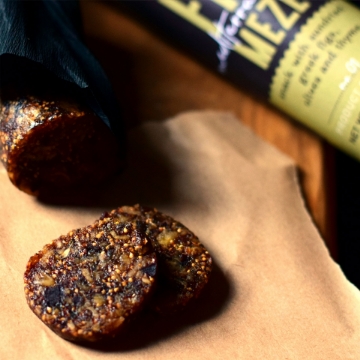
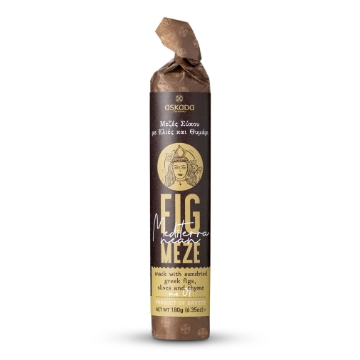
Askada Fig Meze with Kalamon Olives & Thyme (180g) | Artisanal Greek Snack, Vegan, Gluten-Free, Kymi Figs

EL1562
Discover the Askada Fig Meze, an artisanal Greek fig snack perfect for luxury cheese platters. This savory-sweet paste blends sundried Kymi figs, rich Kalamon olives, and wild thyme. 100% vegan, gluten-free, and additive-free. A true taste of the Mediterranean.
£5.47 excl tax excluding shipping
equates to £30.39 per 1 kg(s)

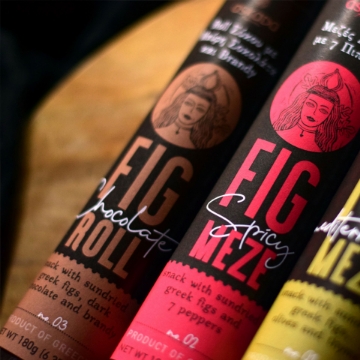
Askada Farm Fig Meze Spicy, Sun-Dried Figs & Seven Peppers, 160g

EL1736
Askada Farm FIG MEZE Spicy combines sun-dried figs from Kymi with seven peppers and aromatic spices. It is easily cut into thin slices for serving as part of a meze selection.
£5.47 excl tax excluding shipping
equates to £34.18 per 1 kg(s)

Askada Farm Kymi Fig Roll with Chocolate & Brandy, 180g – Vegan & Gluten-Free

EL1563
Askada Farm Kymi Fig Roll is a 180g Greek fig dessert made with Kymi fig paste, dark chocolate, brandy and caramelized almonds. Vegan, gluten-free and made without additives.
£5.47 excl tax excluding shipping
equates to £30.39 per 1 kg(s)

Traditional Cretan Paximadi Rusks 280g by Xilofournos Mistrakis

EL2055
Authentic wood-oven baked paximadi from Crete. Crafted for over fifty years using traditional methods, this twice-baked barley rusk offers pure, honest flavor.
£4.00 excl tax excluding shipping
equates to £14.28 per 1 kg(s)