
7 min read
As a connoisseur of Mediterranean luxury gastronomy, my journey has always been deeply rooted in understanding the profound connection between land, tradition, and taste. Greece, with its mosaic of microclimates and ancient culinary heritage, offers a unique canvas for exploring the concept of 'Terroir'—a concept that transcends mere geography to encapsulate the very soul of its produce. It is this intricate interplay that defines the essence of Luxury Greek Gastronomy, transforming simple ingredients into extraordinary sensory experiences.
The Genesis of Greek Terroir: A Culinary Tapestry
The term 'Terroir' is often associated with wine, yet its application in Greek gastronomy is equally, if not more, profound. It refers to the complete natural environment in which a particular food product is produced, including factors such as soil, topography, and climate, alongside the human factor of traditional farming and production methods. Greece’s unparalleled geographical diversity—from mountainous interiors to sun-drenched islands—creates a myriad of microclimates, each nurturing distinct flora and fauna that contribute to unique regional flavors.
Geographical Diversity and Microclimates
Consider the island of Crete, a prime example where the juxtaposition of rugged mountains and coastal plains fosters an exceptional biodiversity. The varied altitudes and exposure to sea breezes create microclimates that influence everything from olive trees to wild herbs. These conditions are not accidental; they are the bedrock upon which specific, irreplaceable tastes are built. The indigenous olive varieties, for instance, flourish under these precise conditions, developing unique aromatic profiles and nutrient compositions.
Ancient Traditions and Indigenous Varieties
For millennia, Greek producers have honed their craft, passing down knowledge from generation to generation. This deep-seated respect for the land and its bounty is evident in the cultivation of indigenous varieties—be it a specific type of grape, a rare strain of wheat, or a unique herb. These traditions are not merely historical footnotes; they are living practices that ensure the integrity and authenticity of Greek culinary products, forming an unbroken chain from antiquity to the modern gourmet table. The adherence to these time-honored methods is a hallmark of true luxury and authenticity.
The Liquid Gold: Unveiling Exceptional Olive Oil
No discussion of Greek gastronomy is complete without revering its liquid gold: extra virgin Olive Oil. Greece is one of the world's foremost producers, celebrated for its high-quality, flavorful oils. What elevates certain Greek olive oils to the pinnacle of luxury is not just their taste, but their chemical composition, a direct reflection of their 'Terroir' and meticulous production.
Polyphenols and Oleocanthal: The Science Behind the Taste
Premium Greek extra virgin olive oils are rich in polyphenols, natural compounds with powerful antioxidant and anti-inflammatory properties. Among these, oleocanthal stands out, responsible for the peppery sensation at the back of the throat—a clear indicator of a high-quality, fresh oil. Research published in PubMed highlights the significant health benefits associated with the regular consumption of high-polyphenol olive oils, including cardiovascular protection and anti-cancer properties. The International Olive Council also provides comprehensive guidelines and standards that underscore the importance of these beneficial compounds in authentic extra virgin olive oil.
From Single Estate to Blends: A Connoisseur's Guide
The world of Greek olive oil is vast and nuanced. Connoisseurs seek out Single Estate & Monovarietals, oils produced from a single olive grove and a single olive variety, offering a pure expression of a specific 'Terroir'. These often boast distinct flavor profiles, from intensely fruity to delicately peppery. Then there are Blends & Signature Collections, meticulously crafted by master blenders who combine different varieties to achieve a balanced and complex aromatic symphony. For those prioritizing purity and sustainability, Organic & Early Harvest oils represent the zenith, harvested when olives are still green to maximize polyphenol content and intense flavor. We also find specialized offerings like Infused & Flavored Oils, which add another dimension to culinary exploration, perfect for culinary experimentation. For those wishing to explore the breadth of flavors, Tasting Sets & Flights offer an educational journey through different profiles. Sustainability-minded individuals can also opt for Refill Tins (EVOO) to reduce packaging waste.
Beyond Olive Oil: A Pantheon of Greek Delicacies
While olive oil is paramount, Greek gastronomy offers a rich tapestry of other luxurious delights, each telling a story of its region and heritage.
Honey: The Nectar of the Gods
Greek honey is renowned globally for its exceptional quality and diversity, a direct result of Greece's unique flora. Thyme honey from the Aegean islands, pine honey from the northern forests, and heather honey from the mountains each possess distinct aromas, textures, and therapeutic properties. The ancient Greeks revered honey, often referring to it as the "nectar of the gods," a testament to its intrinsic value and natural sweetness. The University of Thessaly has conducted extensive research on the antioxidant properties of various Greek honeys, confirming their superior quality.
Cheeses and Cured Meats: Regional Masterpieces
Greece boasts a remarkable array of artisanal cheeses, many with Protected Designation of Origin (PDO) status. Graviera from Crete, often aged in mountain caves, offers a nutty and slightly sweet flavor. Kasseri, a semi-hard cheese, is a staple. Beyond cheeses, traditional cured meats, such as the air-dried ham (Apaki) from Crete or the spicy sausages (Loukaniko) from various regions, demonstrate regional culinary prowess and ancient preservation techniques. These products are often the centerpiece of a luxurious mezze platter, reflecting the rich agricultural practices of their locales.
Wines and Spirits: Echoes of Dionysus
Greece’s winemaking tradition dates back millennia, with indigenous grape varieties like Assyrtiko from Santorini, Agiorgitiko from Nemea, and Xinomavro from Naoussa producing world-class wines. Each grape reflects its 'Terroir' vividly. Small-batch distillates, such as tsipouro or ouzo, also offer a taste of local customs and craftsmanship. For those preferring non-alcoholic options, a growing selection of artisanal Non‑Alcoholic Beverages, often infused with Greek herbs and fruits, provides sophisticated alternatives.
The Art of Presentation: Curating a Luxury Greek Experience
Luxury Greek gastronomy extends beyond the plate; it encompasses the entire experience, from the selection of ingredients to their elegant presentation. Gifting, in particular, becomes an opportunity to share Greece's culinary wealth.
Gifting the Essence of Greece
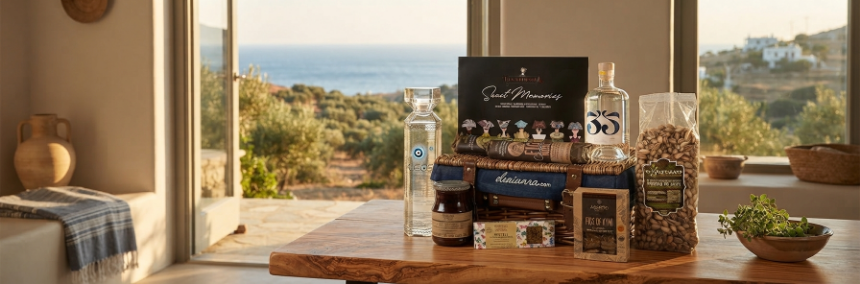
Curating a thoughtful gift means selecting products that embody authenticity and quality. For any occasion, the Luxury Greek Hamper Mezze - The Perfect Gift for Any Occasion offers an exquisite selection of gourmet delights, from premium olive oils to savory spreads, all beautifully arranged. Alternatively, the Luxury Greek Food and Tote Bag Gift Set - Authentic Greek Delicacies in a Stylish Tote Bag combines practicality with pleasure, presenting high-quality foodstuffs in a reusable, chic tote. For a truly indulgent experience, the Luxury Greek Gourmet Gift Box – Artisanal Food Hamper provides a curated collection of artisanal treasures, perfect for discerning palates. These hampers are more than just food; they are an invitation to explore a culture through its finest flavors. To further enhance the ambiance, one might consider incorporating elements of Greek craftsmanship, perhaps a hand-poured candle from a Ceramic & Glass Vessel Candles collection, or a sophisticated Reed Diffusers & Room Scents to evoke the aromas of the Mediterranean.
Embracing Cretan Taste
The island of Crete, with its distinctive 'Terroir' and culinary heritage, merits special mention. Its gastronomic philosophy is a celebration of freshness, seasonality, and the potent flavors of indigenous ingredients. From the robust Cretan Taste olive oils to their unique cheeses and wild greens, the island offers a concentrated experience of luxury Greek gastronomy. Incorporating products specifically from this vibrant region into a gift or personal collection provides a deeper appreciation of regional specificity and quality.
The Future of Greek Gastronomy: Innovation Rooted in Tradition
The landscape of luxury Greek gastronomy is continuously evolving. While deeply rooted in ancient traditions, it embraces innovation, especially in sustainable farming practices and the scientific exploration of nutritional benefits. Producers are increasingly focusing on traceability, organic certification, and eco-friendly packaging, ensuring that the legacy of Greek 'Terroir' is preserved for future generations. This blend of reverence for the past and vision for the future solidifies Greece's position at the forefront of global gourmet excellence.
In conclusion, Luxury Greek Gastronomy is a journey of discovery, an exploration of senses guided by the invisible hand of 'Terroir' and the enduring wisdom of generations. It is an invitation to savor not just food, but a rich cultural narrative, where every bite is a testament to Greece's unparalleled natural bounty and its timeless dedication to culinary artistry.
Continue exploring
Deepen your understanding with these curated Elenianna guides.
Frequently Asked Questions
Greek "terroir" is defined by its unique combination of climate, soil composition, indigenous plant varieties, and traditional cultivation methods across its diverse landscape, resulting in products with distinct characteristics and unparalleled flavor profiles.
Polyphenols are powerful antioxidants found in high concentrations in quality Greek extra virgin olive oil. They contribute to its robust flavor and are scientifically recognized for their anti-inflammatory properties and role in promoting cardiovascular health, as noted by the European Food Safety Authority (EFSA).
When curating a luxury Greek gastronomic gift, focus on authenticity, quality, and provenance. Include artisanal products like single-estate extra virgin olive oil, rare honeys, traditional preserves, and perhaps a handcrafted ceramic item to enhance the experience, all presented elegantly to reflect the sophistication of Greek culinary heritage.

Expert Insights by Xenophon Liapakis
With over 15 years of experience in Mediterranean gastronomy and a certification in Sensory Analysis, Xenophon Liapakis specializes in highlighting the Greek 'Terroir'. As Founder of elenianna, his mission is to bridge scientific knowledge with the ultimate luxury taste experience.