Adolo Ouzo Plomariou – Greek Spirit, 0.7L

A third distillation ouzo, dainty, crystalline, with delicious aroma of masticha. With moderate sweetness and a gurgling freshness that gives coolness
SKU: EL964

The Secret Distillers Kept for Themselves

For generations, the master distillers of Plomari guarded a small, quiet secret. As the copper stills hissed and dripped through long nights on Lesvos, each distiller would set aside a tiny portion of the run — not the beginning, not the end, but the fleeting middle moment when the spirit runs cleanest and most fragrant. They called it simply the heart. It was rarely sold. It was poured for family, for the closest of friends, for the people who understood what they were tasting. Ouzo Adolo is that private pour, made public — the heart of the heart of Ouzo Plomari, the same treasured cut the old distillers once kept only for themselves.

A Name Chosen with Meaning

The man behind it was Isidoros Arvanitis, a Plomari native who spent years travelling before settling on the recipe that would carry his name into the world. Isidoros Arvanitis was the persistent perfectionist from Plomari who searched tirelessly to find the ideal ingredients, and after many journeys, finally found the great recipe that gave him the flavour he had been dreaming of. When it came to naming this rarest cut of his life's work, he chose a word that says everything without needing translation: Adolo — pure, unadulterated, without falsehood. For years, distillers kept a treasured secret for their closest friends: the "heart" of the distillation, the purest and most refined part of the spirit, known for its exceptional clarity and aroma. Isidoros Arvanitis named this spirit: Adolo.

Plomari: The Village That Taught Greece to Distil

There is a reason this story could only begin in one place. On the southern coast of Lesvos, the village of Plomari has been synonymous with ouzo since long before the word became a symbol of Greek hospitality. The island of Lesvos, and particularly the village of Plomari, has a long history in the production of ouzo, produced here by Greek families from the beginning of the 19th century and distilled in the same traditional way today — which is why Plomari is considered the home of ouzo. This is not a marketing claim; it is a lived fact, visible in the terracotta rooftops overlooking the Aegean, in the smell of anise drifting from workshop doors, in a whole village economy still shaped by copper and steam.

The distillery itself sits where it always has, based in Plomari, Lesvos, amidst a beautiful olive grove, and remains a family-run distillery, distilling today with the same dedication, on the same land, in the same copper stills that Isidoros Arvanitis once tended himself.

Ingredients Sourced, Not Bought

What separates a memorable ouzo from an ordinary one usually comes down to where its ingredients begin their journey — and here, almost nothing is left to chance. The anise comes from Lisvori, located 3.5 kilometres from the shores of the bay, cultivated on privately owned land because the distillery considers it the best in the country, alongside fennel from Northern Evia, cinnamon, nutmeg, extracts of Chios mastic, various other Lesbian herbs, and salt from the salt pans of Kalloni, Lesvos. Even the water carries its own pedigree: soft spring water drawn from local mountain sources softens the spirit before it ever reaches the still. The exact ratio of these ingredients remains a closely held secret, just as Isidoros Arvanitis intended it to stay. More than a century later, nobody outside the family knows the full recipe — and that, in an age of endless disclosure, is precisely the point.

Distilled Three Times, for the Sake of One Perfect Pour

Most ouzo is distilled once. Adolo is distilled three times — and it is that third pass through the still that gives the spirit its name and its character. Ouzo Adolo is a unique product of 100% triple distillation, produced by distilling Ouzo Plomari for a third time in a hand-forged copper still dating from 1911, over thirteen patient hours, using a low fire fed with olive wood. This is not a shortcut technology could replicate. Thirteen hours is a long shift for a distiller to keep watch beside a fire, listening for the exact moment the vapour changes character, ready to isolate only the "heart" — the specific part of the distillation that gives Ouzo Adolo its unique flavour and aromatic character, and lends the final distillate a rich bouquet of aromas.

The result, as one importer who has tasted it put it, is a distinct and complex bouquet, more delicate than regular ouzo — proof that restraint, not intensity, is often the harder craft to master.

What Waits Inside the Bottle

Pour Adolo into a small glass and it arrives crystal clear, almost weightless in appearance, with a faint viscosity that clings to the glass in slow, silvery threads. It has a crystalline, clear appearance with thick "tears" and a deep blue emulsion after diluting with water. That transformation — clear spirit turning into a pale, opalescent cloud the moment water meets it — is one of the small everyday miracles of ouzo, and Adolo performs it with unusual elegance, the anise and mastic unfurling gradually rather than arriving all at once.

On the nose, expect layers rather than a single loud note: aniseed first, then something greener and more herbal, a whisper of Chios mastic giving a faint resinous sweetness, and underneath it all, a mineral coolness that seems to carry the sea air of Lesvos with it. Dainty and crystalline, with a delicious aroma of mastic and a moderate sweetness, it finishes with a gurgling freshness that gives coolness rather than heat. Produced in limited batches and slowly distilled in handcrafted copper stills, it offers remarkable balance, refined aromas and exceptional smoothness — the kind of smoothness that makes it easy to forget you are drinking something at 42% strength.

How to Meet It Properly

Ouzo of this quality deserves a small ritual, not a rushed pour. Start with a narrow glass, add cold water first, then ice — in that order, so the temperature falls gradually and the aromatics have time to open rather than seize shut. The best way to serve ouzo is to add the water before the ice, so the temperature is reduced gradually and the aromas are released properly. Watch the liquid cloud gently into that pale, milky white the Greeks call the "louche," and let the glass sit a moment before the first sip.

As for the table around it, Adolo was born for company and small plates rather than solitary sipping. The perfect pairing for ouzo is seafood — grilled octopus, shrimp, and other meze dishes that echo the same coastal air the spirit comes from. Think grilled sardines with lemon, a plate of fresh feta drizzled with olive oil, wild greens, or simply olives and good bread — food built for lingering, for conversation that runs long into the evening, for the unhurried rhythm of a Lesvos taverna at sunset.

More Than a Bottle

Every edition of Ouzo Plomari carries a design worth pausing over before you even open it. Inspired by Greek folk art, traditional shipbuilding, and symbols deeply rooted in Greek culture, each limited-edition bottle becomes a small work of art, carrying the spirit of Greek tradition far beyond its shores. Adolo, as the rarest expression in the range, is produced only in limited batches — a reflection of just how much time and attention thirteen slow hours by an olive-wood fire really demands. This makes it less an everyday bottle and more an occasion in itself: a gift for someone who already knows and loves ouzo and is ready to taste what the distillers used to keep only for themselves, or a personal indulgence for the evening you want something with a story behind every drop.

A century and more after Isidoros Arvanitis first went searching for the recipe of his dreams, his family's distillery still stands on the same Lesvos hillside, still lights the same style of fire beneath the same style of copper. Adolo is what happens when that patience is given room to become something close to perfect — the heart of the heart, finally out of hiding, and into your glass.

£17.12 excl tax
equates to £24.46 per 1 lt
excluding shipping
increase decrease
Availability: Out of stock
Delivery date: 3-10 days

The Secret Distillers Kept for Themselves

For generations, the master distillers of Plomari guarded a small, quiet secret. As the copper stills hissed and dripped through long nights on Lesvos, each distiller would set aside a tiny portion of the run — not the beginning, not the end, but the fleeting middle moment when the spirit runs cleanest and most fragrant. They called it simply the heart. It was rarely sold. It was poured for family, for the closest of friends, for the people who understood what they were tasting. Ouzo Adolo is that private pour, made public — the heart of the heart of Ouzo Plomari, the same treasured cut the old distillers once kept only for themselves.

A Name Chosen with Meaning

The man behind it was Isidoros Arvanitis, a Plomari native who spent years travelling before settling on the recipe that would carry his name into the world. Isidoros Arvanitis was the persistent perfectionist from Plomari who searched tirelessly to find the ideal ingredients, and after many journeys, finally found the great recipe that gave him the flavour he had been dreaming of. When it came to naming this rarest cut of his life's work, he chose a word that says everything without needing translation: Adolo — pure, unadulterated, without falsehood. For years, distillers kept a treasured secret for their closest friends: the "heart" of the distillation, the purest and most refined part of the spirit, known for its exceptional clarity and aroma. Isidoros Arvanitis named this spirit: Adolo.

Plomari: The Village That Taught Greece to Distil

There is a reason this story could only begin in one place. On the southern coast of Lesvos, the village of Plomari has been synonymous with ouzo since long before the word became a symbol of Greek hospitality. The island of Lesvos, and particularly the village of Plomari, has a long history in the production of ouzo, produced here by Greek families from the beginning of the 19th century and distilled in the same traditional way today — which is why Plomari is considered the home of ouzo. This is not a marketing claim; it is a lived fact, visible in the terracotta rooftops overlooking the Aegean, in the smell of anise drifting from workshop doors, in a whole village economy still shaped by copper and steam.

The distillery itself sits where it always has, based in Plomari, Lesvos, amidst a beautiful olive grove, and remains a family-run distillery, distilling today with the same dedication, on the same land, in the same copper stills that Isidoros Arvanitis once tended himself.

Ingredients Sourced, Not Bought

What separates a memorable ouzo from an ordinary one usually comes down to where its ingredients begin their journey — and here, almost nothing is left to chance. The anise comes from Lisvori, located 3.5 kilometres from the shores of the bay, cultivated on privately owned land because the distillery considers it the best in the country, alongside fennel from Northern Evia, cinnamon, nutmeg, extracts of Chios mastic, various other Lesbian herbs, and salt from the salt pans of Kalloni, Lesvos. Even the water carries its own pedigree: soft spring water drawn from local mountain sources softens the spirit before it ever reaches the still. The exact ratio of these ingredients remains a closely held secret, just as Isidoros Arvanitis intended it to stay. More than a century later, nobody outside the family knows the full recipe — and that, in an age of endless disclosure, is precisely the point.

Distilled Three Times, for the Sake of One Perfect Pour

Most ouzo is distilled once. Adolo is distilled three times — and it is that third pass through the still that gives the spirit its name and its character. Ouzo Adolo is a unique product of 100% triple distillation, produced by distilling Ouzo Plomari for a third time in a hand-forged copper still dating from 1911, over thirteen patient hours, using a low fire fed with olive wood. This is not a shortcut technology could replicate. Thirteen hours is a long shift for a distiller to keep watch beside a fire, listening for the exact moment the vapour changes character, ready to isolate only the "heart" — the specific part of the distillation that gives Ouzo Adolo its unique flavour and aromatic character, and lends the final distillate a rich bouquet of aromas.

The result, as one importer who has tasted it put it, is a distinct and complex bouquet, more delicate than regular ouzo — proof that restraint, not intensity, is often the harder craft to master.

What Waits Inside the Bottle

Pour Adolo into a small glass and it arrives crystal clear, almost weightless in appearance, with a faint viscosity that clings to the glass in slow, silvery threads. It has a crystalline, clear appearance with thick "tears" and a deep blue emulsion after diluting with water. That transformation — clear spirit turning into a pale, opalescent cloud the moment water meets it — is one of the small everyday miracles of ouzo, and Adolo performs it with unusual elegance, the anise and mastic unfurling gradually rather than arriving all at once.

On the nose, expect layers rather than a single loud note: aniseed first, then something greener and more herbal, a whisper of Chios mastic giving a faint resinous sweetness, and underneath it all, a mineral coolness that seems to carry the sea air of Lesvos with it. Dainty and crystalline, with a delicious aroma of mastic and a moderate sweetness, it finishes with a gurgling freshness that gives coolness rather than heat. Produced in limited batches and slowly distilled in handcrafted copper stills, it offers remarkable balance, refined aromas and exceptional smoothness — the kind of smoothness that makes it easy to forget you are drinking something at 42% strength.

How to Meet It Properly

Ouzo of this quality deserves a small ritual, not a rushed pour. Start with a narrow glass, add cold water first, then ice — in that order, so the temperature falls gradually and the aromatics have time to open rather than seize shut. The best way to serve ouzo is to add the water before the ice, so the temperature is reduced gradually and the aromas are released properly. Watch the liquid cloud gently into that pale, milky white the Greeks call the "louche," and let the glass sit a moment before the first sip.

As for the table around it, Adolo was born for company and small plates rather than solitary sipping. The perfect pairing for ouzo is seafood — grilled octopus, shrimp, and other meze dishes that echo the same coastal air the spirit comes from. Think grilled sardines with lemon, a plate of fresh feta drizzled with olive oil, wild greens, or simply olives and good bread — food built for lingering, for conversation that runs long into the evening, for the unhurried rhythm of a Lesvos taverna at sunset.

More Than a Bottle

Every edition of Ouzo Plomari carries a design worth pausing over before you even open it. Inspired by Greek folk art, traditional shipbuilding, and symbols deeply rooted in Greek culture, each limited-edition bottle becomes a small work of art, carrying the spirit of Greek tradition far beyond its shores. Adolo, as the rarest expression in the range, is produced only in limited batches — a reflection of just how much time and attention thirteen slow hours by an olive-wood fire really demands. This makes it less an everyday bottle and more an occasion in itself: a gift for someone who already knows and loves ouzo and is ready to taste what the distillers used to keep only for themselves, or a personal indulgence for the evening you want something with a story behind every drop.

A century and more after Isidoros Arvanitis first went searching for the recipe of his dreams, his family's distillery still stands on the same Lesvos hillside, still lights the same style of fire beneath the same style of copper. Adolo is what happens when that patience is given room to become something close to perfect — the heart of the heart, finally out of hiding, and into your glass.

Products specifications
Attribute nameAttribute value
Alc/Vol43%
Net Weight700 ml
  • Product can be reviewed only after purchasing it
  • Only registered users can write reviews
*
*
Bad
Excellent
*
*
*
*
Products specifications
Attribute nameAttribute value
Alc/Vol43%
Net Weight700 ml
Only registered users can write reviews
AI recommendations

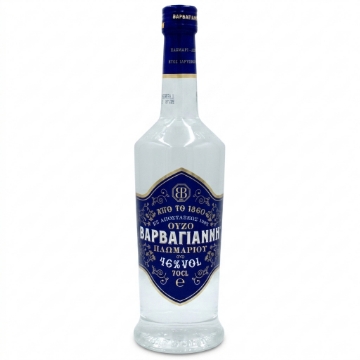
Varvayanni Blue Ouzo 70cl - Classic Greek Anise Spirit

EL1676
Five-generation family recipe from Plomari. 100% distilled with aniseed and aromatic herbs. Pure spring water from Lesvos creates a smooth, crystal-clear spirit.
£14.63 excl tax excluding shipping
equates to £20.90 per 1 lt

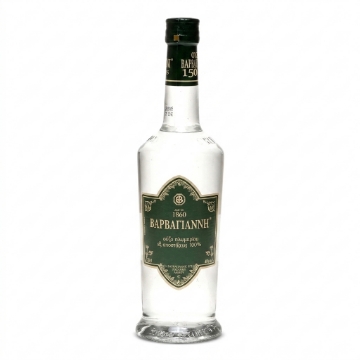
Varvayanni Ouzo Green 70cl - Soft Taste Greek Spirit 42% ABV | Plomari Lesvos Water, Anise Aperitif, Traditional Distillation

EL1677
A soft, ultra-light Greek ouzo crafted with selected ingredients and the special waters of Plomari, Lesvos. Rich anise flavour at 42% ABV in a 70cl bottle.
£14.63 excl tax excluding shipping
equates to £20.90 per 1 lt

35N Greek Ouzo 200ml - 100% Distilled Spirit 42% ABV | Rethymno Crete Traditional Anise Aperitif

EL1991
35N Greek Ouzo 200ml is a 100% distilled ouzo from Rethymno, Crete at 42% ABV with a light, smooth profile, ideal with meze, seafood, and fish.
£8.52 excl tax excluding shipping
equates to £42.59 per 1 lt

35N Authentic Greek Ouzo 700ml - Premium 100% Distilled Spirit

EL1411
Discover the rich heritage of Greece with 35N Authentic Greek Ouzo 700ml. This premium 100% distilled spirit delivers an aromatic, anise-flavored experience. Perfect for sipping!
£14.63 excl tax excluding shipping
equates to £20.90 per 1 lt