LADOLEA Organic Patrinia Extra Virgin Olive Oil 600ml

Organic single-variety extra virgin olive oil from the Patrinia olive, cold-pressed under 27°C and left unfiltered. Delicate, sweet aroma with notes of banana and fresh herbs, in a 600ml carton.
Manufacturer: Ladolea
SKU: EL233

A Seaside Village, Two Brothers, and an Olive Called Patrinia

The story of this oil begins not in a boardroom but on a hillside above the Gulf of Corinth, where the village of Melissi has pressed olives for longer than anyone can remember. Thanos and Panos Kloutsiniotis grew up hearing about that harvest from a distance, until one November they went home and stepped straight into it. The idea came to Thanos and Panos Kloutsiniotis after a visit to their place of origin, the seaside village of Melissi, where they happened upon the olive harvest. What they found there — baskets of just-turning olives, family hands moving quickly before the fruit could over-ripen, the particular hush of a working grove — became the reason Ladolea exists at all.

They could have kept things simple and sold whatever the trees gave them. Instead, they focused on indigenous varieties, harvesting the fruit while it was still unripe and green so it would impart its most expressive notes. This bottle is the quieter, more graceful of the results: a single-variety oil made entirely from Patrinia olives, a variety local to this stretch of Corinthia and rarely seen bottled on its own.

Where It Grows

The olives for this oil come from Melissi, a seaside village in Corinthia, Greece, where groves run down toward the water and the sea air moves constantly through the trees. It is not the dramatic, terraced mountain landscape you might picture from other Greek oils — it is gentler terrain, close to the coast, and that closeness shows up in the glass. Patrinia is a variety that responds to this particular light and salt-tinged air with softness rather than intensity, which is precisely the character the Kloutsiniotis brothers wanted to capture rather than correct.

An Early, Deliberate Harvest

Every decision here works backward from flavour. The fruit is picked in an early harvest in November, well before the olives darken and soften with ripeness. Picking early means less oil per tree and more work for the harvesters — production is lower at this stage, but the olives impart a fruitier and more pungent note that simply cannot be recovered from fruit picked later in the season for convenience. It is the kind of trade-off that only makes sense if taste, not yield, is the actual goal.

From there, the olives are milled the same day, gently and without heat. The oil is cold-pressed under 27°C and left unfiltered, so nothing of the fruit's natural character is stripped away or diluted for the sake of a cleaner-looking bottle. What you get is the oil as it exists straight from the stone press — cloudy in its youth, alive, and entirely itself.

What It Tastes Like

Pour this one and the first thing you notice is restraint. The aroma is delicate and sweet, with notes of banana and fresh herbs, and the colour is a light, pale gold rather than the deep green-gold of a more robust oil. On the palate it stays soft — there is little of the throat-catching pepperiness that defines many Greek extra virgin oils. Instead there's a gentle roundness, a faint sweetness, and that same herbal lift that carries through from nose to finish. Tasting notes from independent reviewers describe similar Patrinia oils as showing delicately fruity character with floral and pine nut aromas, slightly vegetal on the palate with notes of radish — a profile built for nuance rather than announcement.

This is an oil for dishes that would be bullied by something more assertive. Drizzle it, uncooked, over grilled white fish, steamed vegetables, a simple bowl of yoghurt with cucumber, or a plate of soft cheese and honey. It suits combining with mild flavours — vegetables, fish, white meat, and a light vinaigrette — the kind of cooking where you want the oil to soften and round out a dish rather than compete with it. It also finishes beautifully drizzled straight over warm bread with nothing else added at all, letting the banana-and-herb aroma stand on its own.

The Amphora, Reimagined

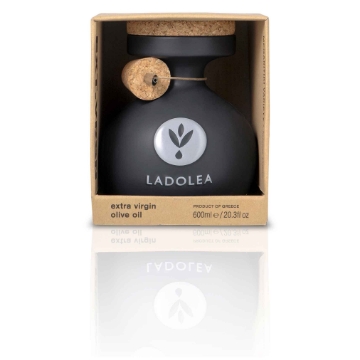
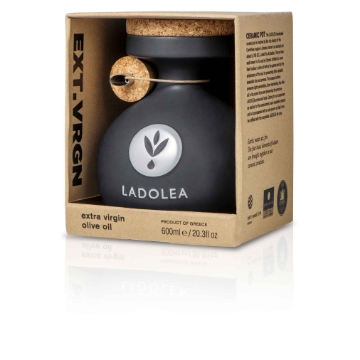
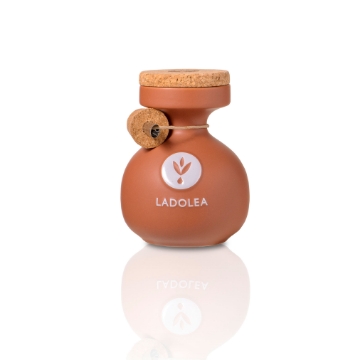
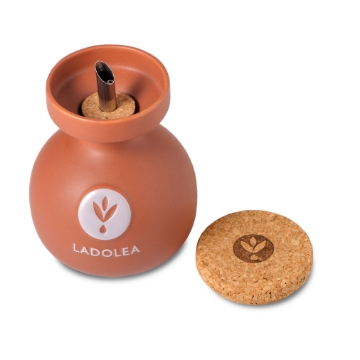
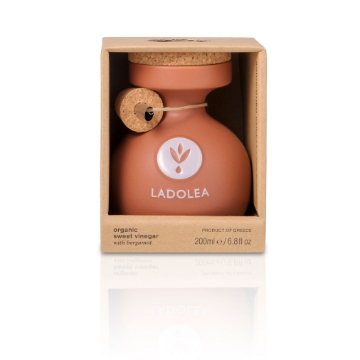
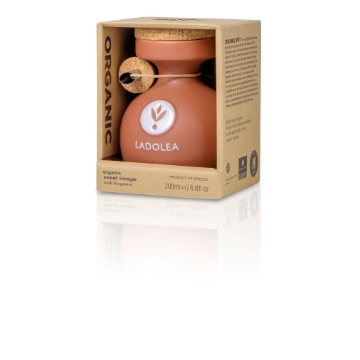
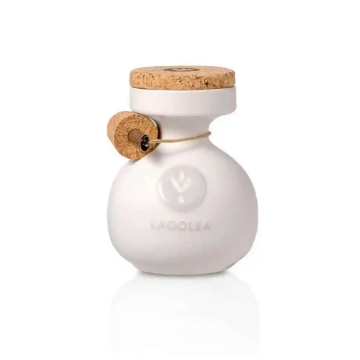
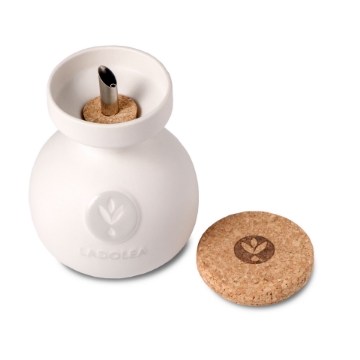
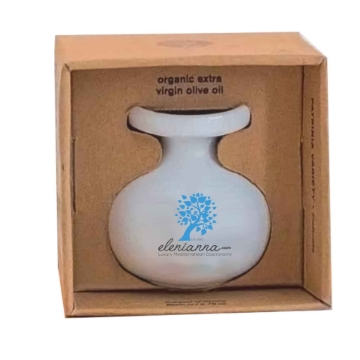
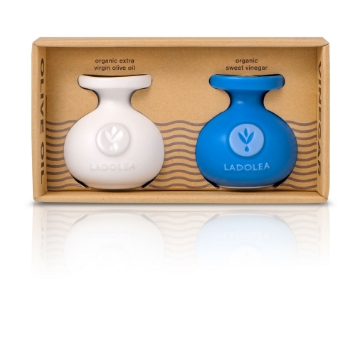
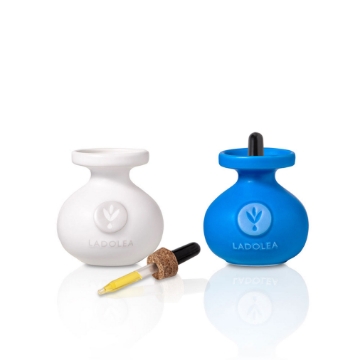
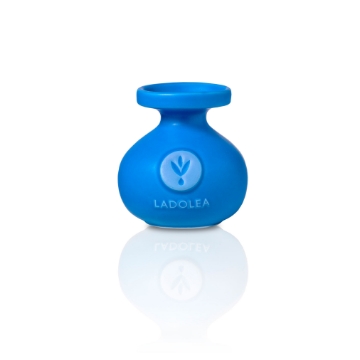
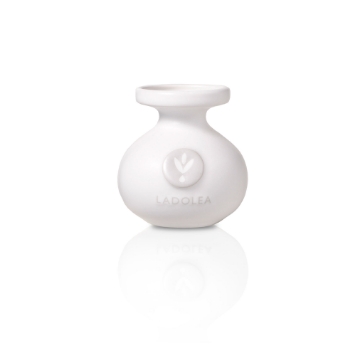
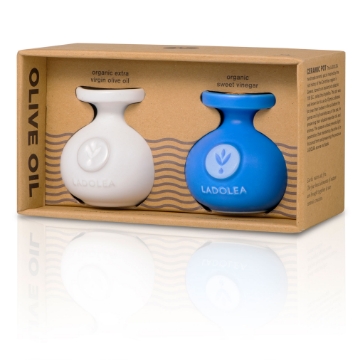
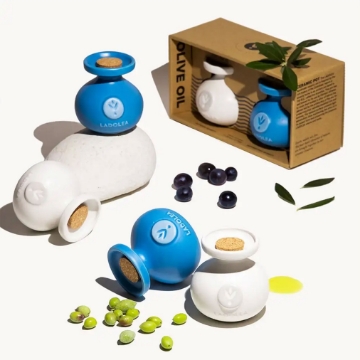
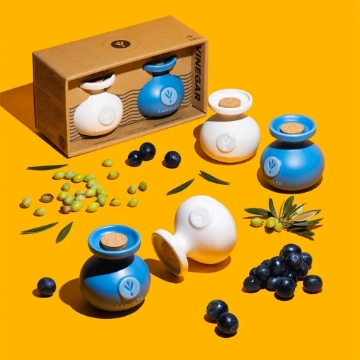
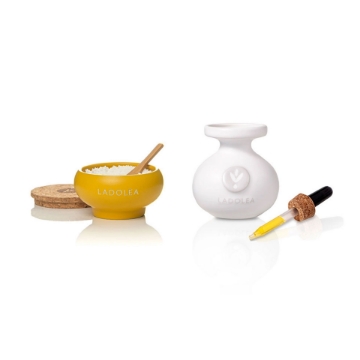
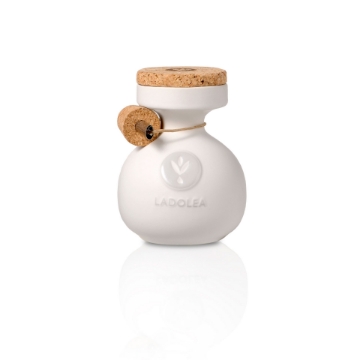
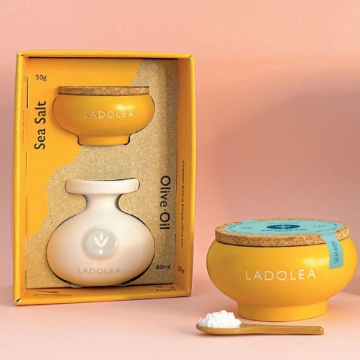
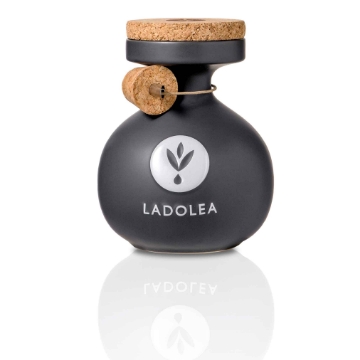
Look at the pot before you even open it and you're looking at a small piece of archaeology. Ladolea's terracotta packaging takes its shape from the Aryballos, an ancient Corinthian pot dating back to 700 B.C., well known for its use by Olympic athletes who smeared their bodies with olive oil before competing. It's a striking detail once you know it: this exact region was producing and using olive oil in ceremonial and athletic life nearly three thousand years ago, and the packaging on your counter today is a direct, deliberate nod to that lineage rather than a decorative flourish borrowed from nowhere in particular.

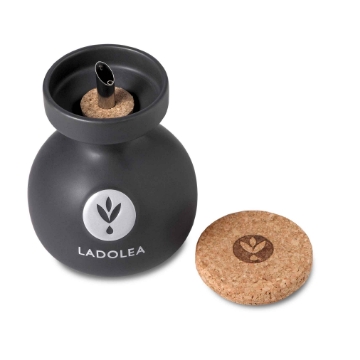
The material choice is also entirely practical. The opaque surface of the terracotta prevents light from penetrating, which helps preserve the oil's aromas — light and heat are the two forces that dull a fresh oil fastest, and clay solves both problems more elegantly than tinted glass ever could. The design has not gone unnoticed by the outside world either: Ladolea's packaging has picked up international recognition, including a Red Dot Communication Award and a Silver Pentaward for the amphora concept.

Who Made This

Behind the label are two brothers who split the work the way brothers with different training often do. Panos, a chemical engineer, oversees production and quality control, while Thanos, trained in economics, manages the business side. Their model is unusual in a good way: rather than owning every grove themselves, they collaborate directly with selected olive producers, offering consultation and seminars, so growers can focus purely on cultivating the olives correctly while Ladolea takes responsibility for the extraction and everything downstream. It is a partnership built on trust in both directions, and it shows in the consistency of what ends up in the pot.

The farming itself is done without shortcuts. The olives are handpicked and grown without pesticides or synthetic chemicals, an approach that costs more in labour but leaves the fruit — and the oil pressed from it — closer to what nature actually produced.

Bringing It to Your Table

  • As a finishing oil — spooned generously over grilled sea bream, steamed asparagus, or a plate of fresh feta just before serving.
  • In a light vinaigrette — whisked with lemon and a touch of mustard for a dressing delicate enough not to overwhelm soft lettuces or herbs.
  • Alongside bread and honey — a simple, almost meditative way to taste the banana-herbal character on its own terms.
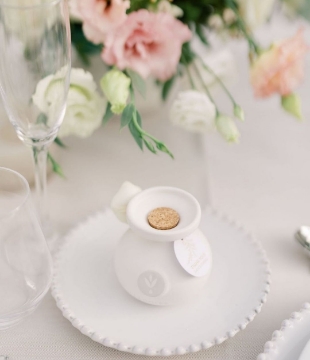
  • As a gift — the terracotta amphora alone makes this a piece worth giving, and the story behind it gives any host or hostess something genuinely interesting to talk about at the table.

Why This Bottle Belongs on Your Shelf

There is no shortage of olive oil in the world, and a great deal of it tastes like very little at all. What makes this one worth seeking out is the sum of small, deliberate choices: a variety most producers overlook, an early and less profitable harvest chosen purely for flavour, a cold, gentle press that keeps the oil unfiltered and true to itself, and packaging that turns a functional container into a small piece of Corinthian history you can hold in your hand. Two brothers built this from a single afternoon in their family's olive grove, and every bottle since has been an attempt to bottle that same feeling — the particular hush of a Melissi harvest, poured out gently, and shared.

£27.45 excl tax
equates to £45.75 per 1 lt
excluding shipping
increase decrease
Availability: In stock
Delivery date: 3-10 days

A Seaside Village, Two Brothers, and an Olive Called Patrinia

The story of this oil begins not in a boardroom but on a hillside above the Gulf of Corinth, where the village of Melissi has pressed olives for longer than anyone can remember. Thanos and Panos Kloutsiniotis grew up hearing about that harvest from a distance, until one November they went home and stepped straight into it. The idea came to Thanos and Panos Kloutsiniotis after a visit to their place of origin, the seaside village of Melissi, where they happened upon the olive harvest. What they found there — baskets of just-turning olives, family hands moving quickly before the fruit could over-ripen, the particular hush of a working grove — became the reason Ladolea exists at all.

They could have kept things simple and sold whatever the trees gave them. Instead, they focused on indigenous varieties, harvesting the fruit while it was still unripe and green so it would impart its most expressive notes. This bottle is the quieter, more graceful of the results: a single-variety oil made entirely from Patrinia olives, a variety local to this stretch of Corinthia and rarely seen bottled on its own.

Where It Grows

The olives for this oil come from Melissi, a seaside village in Corinthia, Greece, where groves run down toward the water and the sea air moves constantly through the trees. It is not the dramatic, terraced mountain landscape you might picture from other Greek oils — it is gentler terrain, close to the coast, and that closeness shows up in the glass. Patrinia is a variety that responds to this particular light and salt-tinged air with softness rather than intensity, which is precisely the character the Kloutsiniotis brothers wanted to capture rather than correct.

An Early, Deliberate Harvest

Every decision here works backward from flavour. The fruit is picked in an early harvest in November, well before the olives darken and soften with ripeness. Picking early means less oil per tree and more work for the harvesters — production is lower at this stage, but the olives impart a fruitier and more pungent note that simply cannot be recovered from fruit picked later in the season for convenience. It is the kind of trade-off that only makes sense if taste, not yield, is the actual goal.

From there, the olives are milled the same day, gently and without heat. The oil is cold-pressed under 27°C and left unfiltered, so nothing of the fruit's natural character is stripped away or diluted for the sake of a cleaner-looking bottle. What you get is the oil as it exists straight from the stone press — cloudy in its youth, alive, and entirely itself.

What It Tastes Like

Pour this one and the first thing you notice is restraint. The aroma is delicate and sweet, with notes of banana and fresh herbs, and the colour is a light, pale gold rather than the deep green-gold of a more robust oil. On the palate it stays soft — there is little of the throat-catching pepperiness that defines many Greek extra virgin oils. Instead there's a gentle roundness, a faint sweetness, and that same herbal lift that carries through from nose to finish. Tasting notes from independent reviewers describe similar Patrinia oils as showing delicately fruity character with floral and pine nut aromas, slightly vegetal on the palate with notes of radish — a profile built for nuance rather than announcement.

This is an oil for dishes that would be bullied by something more assertive. Drizzle it, uncooked, over grilled white fish, steamed vegetables, a simple bowl of yoghurt with cucumber, or a plate of soft cheese and honey. It suits combining with mild flavours — vegetables, fish, white meat, and a light vinaigrette — the kind of cooking where you want the oil to soften and round out a dish rather than compete with it. It also finishes beautifully drizzled straight over warm bread with nothing else added at all, letting the banana-and-herb aroma stand on its own.

The Amphora, Reimagined

Look at the pot before you even open it and you're looking at a small piece of archaeology. Ladolea's terracotta packaging takes its shape from the Aryballos, an ancient Corinthian pot dating back to 700 B.C., well known for its use by Olympic athletes who smeared their bodies with olive oil before competing. It's a striking detail once you know it: this exact region was producing and using olive oil in ceremonial and athletic life nearly three thousand years ago, and the packaging on your counter today is a direct, deliberate nod to that lineage rather than a decorative flourish borrowed from nowhere in particular.

The material choice is also entirely practical. The opaque surface of the terracotta prevents light from penetrating, which helps preserve the oil's aromas — light and heat are the two forces that dull a fresh oil fastest, and clay solves both problems more elegantly than tinted glass ever could. The design has not gone unnoticed by the outside world either: Ladolea's packaging has picked up international recognition, including a Red Dot Communication Award and a Silver Pentaward for the amphora concept.

Who Made This

Behind the label are two brothers who split the work the way brothers with different training often do. Panos, a chemical engineer, oversees production and quality control, while Thanos, trained in economics, manages the business side. Their model is unusual in a good way: rather than owning every grove themselves, they collaborate directly with selected olive producers, offering consultation and seminars, so growers can focus purely on cultivating the olives correctly while Ladolea takes responsibility for the extraction and everything downstream. It is a partnership built on trust in both directions, and it shows in the consistency of what ends up in the pot.

The farming itself is done without shortcuts. The olives are handpicked and grown without pesticides or synthetic chemicals, an approach that costs more in labour but leaves the fruit — and the oil pressed from it — closer to what nature actually produced.

Bringing It to Your Table

  • As a finishing oil — spooned generously over grilled sea bream, steamed asparagus, or a plate of fresh feta just before serving.
  • In a light vinaigrette — whisked with lemon and a touch of mustard for a dressing delicate enough not to overwhelm soft lettuces or herbs.
  • Alongside bread and honey — a simple, almost meditative way to taste the banana-herbal character on its own terms.
  • As a gift — the terracotta amphora alone makes this a piece worth giving, and the story behind it gives any host or hostess something genuinely interesting to talk about at the table.

Why This Bottle Belongs on Your Shelf

There is no shortage of olive oil in the world, and a great deal of it tastes like very little at all. What makes this one worth seeking out is the sum of small, deliberate choices: a variety most producers overlook, an early and less profitable harvest chosen purely for flavour, a cold, gentle press that keeps the oil unfiltered and true to itself, and packaging that turns a functional container into a small piece of Corinthian history you can hold in your hand. Two brothers built this from a single afternoon in their family's olive grove, and every bottle since has been an attempt to bottle that same feeling — the particular hush of a Melissi harvest, poured out gently, and shared.
Products specifications
Attribute nameAttribute value
Product TypeOrganic
Production ProcessCold process
Olive VarietyPatrinia Variety
  • Product can be reviewed only after purchasing it
  • Only registered users can write reviews
*
*
Bad
Excellent
*
*
*
*
Frequently asked questions
What makes LADOLEA Patrinia EVOO unique?

It's a single-varietal organic EVOO from the Patrinia olive, harvested early and cold-pressed within 24 hours. This process maximizes health-promoting polyphenols and preserves its delicate, fruity, and pungent flavor profile.

How should I store this olive oil to maintain its quality?

Store in a cool, dark place away from direct sunlight and heat. The unfiltered nature means natural sedimentation may occur, which is normal and does not affect quality. Keep the bottle tightly sealed after each use.

Products specifications
Attribute nameAttribute value
Product TypeOrganic
Production ProcessCold process
Olive VarietyPatrinia Variety
Only registered users can write reviews
Pairs beautifully with

Organic Extra Virgin Olive Oil LADOLEA 80ml

EL1612
The Premium LADOLEA® olive oils are 100% single varietal and each one stems from a different variety of olives, exclusively grown in the northern part of the Peloponnesian peninsula.
Call for pricing

Organic Extra Virgin Olive Oil & Organic Balsamic Vinegar 2x 80ml

EL1610
The multi-award winning LADOLEA olive oils are 100% single varietal and each oil is produced from a different variety of olives grown exclusively in the northern region of the Peloponnesian peninsula.
£15.66 excl tax excluding shipping

Ladolea Organic Extra Virgin Olive Oil – Koroneiki 200ml | Premium Greek Early Harvest, Cold-Pressed, Single Varietal Gourmet EVOO

EL1959
Discover Ladolea Organic Extra Virgin Olive Oil, a premium Koroneiki variety from Corinthia. This early harvest, cold-pressed Greek EVOO offers fresh notes of green apple.
£17.12 excl tax excluding shipping
equates to £85.62 per 1 lt

LADOLEA Fleur de Sel & Organic Extra Virgin Olive Oil Gift Set | Handpicked Greek Salt & Cold-Pressed EVOO

EL1830
Elevate your culinary creations with this exquisite LADOLEA gift set. It features hand-harvested Messolonghi fleur de sel and single varietal, organic extra virgin olive oil—the perfect finishing touches for gourmet dishes and an ideal gift for food connoisseurs.
£17.21 excl tax excluding shipping