Escargot De Crete Snail Fillets in Cretan Olive Oil with Lemon and Thyme - 90g Jar

Cretan Helix Aspersa snail fillets packed in extra virgin Cretan olive oil with fresh lemon and thyme, in a 90g glass jar without preservatives.
Manufacturer: Escargot De Crete
SKU: EL2127

The Island Where Snails Became a Delicacy

On the north coast of Crete, in a small settlement called Latzimas near Rethymno, there is a farm unlike any other in the world. Here, snails do not live crowded in dark trays under artificial light. They move slowly across open ground, among organically grown olive trees, touched by real sun, real rain, real wind — the same elements that have shaped Cretan food for three thousand years. The snails live among organically grown olive trees, in direct contact with the wind, the rain, the sun and the soils of this place, and with the olive trees and the natural flora from which they get their unique characteristics.

It is easy to underestimate a snail. In most of the world it is a curiosity, a French bistro cliché served swimming in garlic butter. In Crete, it is something else entirely — a food that quietly kept people alive. During centuries of foreign occupation, when taxation and requisition stripped the island of its harvests, and again during the hardship of the Second World War, it was the humble snail, gathered after the rains, that filled the pot when little else remained. With the best produce seized by occupiers, snails, wild greens, and carob sustained the Cretan population, and many locals survived the war better than other Greeks thanks to their culinary resourcefulness. What began as necessity became identity. In Crete, the snail isn't just food — it's a symbol of endurance and tradition, its role in Cretan culture running deep, from ancient Minoan times to modern village feasts.

The Man Who Took a Village Food and Gave It a Future

Escargot de Crete was founded in 2010 on Crete by Dr. Charalampos Kiagias, a pioneer who established the first vertical unit of snail breeding and production of by-products in Greece. He is not a nostalgic farmer reviving an old craft for its own sake; he grew up watching his grandparents collect snails from the fields, and understood, as a scientist, that this instinctive knowledge deserved rigor rather than romanticism. Dr. Kiagias grew up on Crete, where the beneficial properties of snails for human health have been known first-hand for centuries.

What he built at Latzimas is genuinely unusual: a farm that is among the most productive in the world per square metre, and the first to produce snails all year round, benefitting from Crete's exceptional climate. Most snail farms pause through winter. This one never does. That single fact — made possible only by the particular mildness of the Cretan air — is what allows the fillets in your jar, the tea-preserved delicacy, and the frozen shell-on snails to reach your table with a freshness and consistency that seasonal farms simply cannot match.

An Aroma Compared to Truffle

Ask anyone who has tasted these snails what surprises them most, and the answer is almost always the same: the smell. Cretan snails raised among olive groves and wild herbs develop a delicate, earthy perfume that tasters and the producer themselves liken to truffle — not in flavour exactly, but in that same haunting, appetite-sharpening effect an ingredient has when it lifts an entire dish rather than simply flavouring it. The olive oil carries a very special aroma of Cretan snails, similar to that of truffle, capable on its own of transforming the result of a recipe. This is why the producer insists on a simple rule: the snails and the olive oil should not be cooked further — add them after the heat is turned off, so this fragile, precious aroma is never boiled away.

Two Quiet Innovations, Built Around One Philosophy

Traditional preserved snail fillets, wherever they come from, are almost always kept in brine — salty, sharp, and slightly muting to the natural flavour underneath. Escargot de Crete decided this compromise was unnecessary and set out, with real patience, to remove it.

Snail Fillets in Cretan Olive Oil

These are award-winning ready meals of exceptional quality and size snail fillets, preserved in extra virgin Cretan olive oil, in several different flavours. The oil itself becomes part of the ingredient: it has trapped the delicate aroma of the snails, equal to truffle, and carries that aroma directly into whatever you cook. This is not a garnish to be reheated and forgotten — it is a finishing ingredient, closer in spirit to good anchovies or a spoon of truffle oil than to a tinned convenience food. Used directly as a first course, a meze alongside white wine or ouzo, or folded into salads, risotto, pasta, pizza, bruschetta and omelettes, it turns an everyday plate into something considerably more interesting. The recognition has followed: these fillets earned Gold at the Mediterranean Taste Awards for the olive oil, lemon and thyme variation, and the wider range was named among the best innovative food products of Crete by the Marinopoulos Group at a ceremony held at the Athens Concert Hall in 2014. These products were awarded the best innovative products of Crete prize by the Marinopoulos Group in 2014 at the Athens Concert Hall.

Snail Fillets in Sage Tea — the Alternative Nobody Else Offers

This is arguably the most quietly clever product in the range. Snail fillets in sage decoction are the producer's answer to fillets preserved in brine — Cretan sage, sometimes called the immortal herb, was chosen as its own unique method of preservation, incomparably gentler than salt. Sage of Crete carries centuries of description as the herb of the immortals, Salvia the healing, the Greek sprout — it has been infused into local kitchens and remedies for generations, and here it does double duty: preserving the fillets and lending them a soft, herbal background note. The practical benefits are real. There is no need to de-brine, they are easy to rinse, they contain no salt at all, and because of this the natural aroma of the snails — again compared to truffle — is better preserved; the fillets maintain their freshness, and even the sage tea itself is rich in antioxidants, making the jar ideal for no-salt diets. Even the cooking liquid is not wasted: it can be used to flavour the finished dish, and the fillets themselves work beautifully in omelettes, pizzas, pasta, salads, sandwiches and bruschettas, stuffed into vegetables, or mixed with sourdough, trachanas, barley and legumes.

Pre-Cooked Cretan Snails, Shell On

For those who want the fuller, more traditional Cretan experience — the tapping of shells, the slow, sociable eating that has defined snail suppers on the island for generations — there is a shell-on option, already precooked and frozen for convenience. These are Cretan snails made more consumer-friendly: cleaned, precooked, frozen, ready for cooking, health checked, delicious, and made without chemical additives or preservatives, using the producer's own know-how. They keep beautifully in the freezer and behave exactly as good frozen seafood should: they maintain their freshness to an absolute degree, without the drawbacks familiar from fresh-trade products, and no special culinary knowledge is required to bring them confidently to the table.

More Than a Curiosity — a Genuinely Useful Ingredient

It would be easy to file all this under "novelty." The nutrition tells a different story. A high source of iron and protein, low in fat, rich in trace elements and total phenols — these snails open genuinely new culinary territory rather than simply repackaging an old one. For anyone managing sodium intake, the sage-tea fillets in particular solve a problem no ordinary preserved seafood or meat product usually can. And because nothing here is boiled down to blandness, the ingredient earns its place on the plate rather than hiding inside it.

How to Bring It to Your Table

  • Straight from the jar, warmed only by the residual heat of a dish, spooned over risotto or fresh pasta in the final seconds before serving.
  • As a meze, with good bread, a chilled glass of white wine or a small ouzo — the way it is enjoyed on the farm itself after a visit to the grounds.
  • Folded into an omelette or bruschetta topping, where the truffle-like note has room to unfold against egg or toasted bread.
  • Tossed through a salad of wild greens or legumes, echoing the way snails have traditionally shared a plate with foraged Cretan produce.
  • The shell-on frozen snails, simmered slowly in the classic Cretan style — chochlioi boubouristi, pan-fried with rosemary and a dash of vinegar — for those who want the full, hands-on ritual.

Why It Deserves a Place in a Considered Kitchen

What makes this range worth seeking out is not novelty for its own sake, but the seriousness behind it. A scientist who grew up watching his grandparents forage after the rain went on to build the first year-round, vertically integrated snail farm of its kind, on land shared with organic olive groves, and then spent years solving a problem the rest of the industry had simply accepted — that good snails had to taste of salt. The result is a small, precise collection of products that carry an unmistakable sense of place: the mild winters of Rethymno, the scent of olive leaves, the old habit of using sage as medicine and seasoning at once. Few ingredients let you taste a landscape this directly. Fewer still come with the patience of someone who spent over a decade refining exactly how to do it properly.

£17.21 excl tax
equates to £191.22 per 1 kg(s)
excluding shipping
increase decrease
Availability: In stock
Delivery date: 3-10 days

The Island Where Snails Became a Delicacy

On the north coast of Crete, in a small settlement called Latzimas near Rethymno, there is a farm unlike any other in the world. Here, snails do not live crowded in dark trays under artificial light. They move slowly across open ground, among organically grown olive trees, touched by real sun, real rain, real wind — the same elements that have shaped Cretan food for three thousand years. The snails live among organically grown olive trees, in direct contact with the wind, the rain, the sun and the soils of this place, and with the olive trees and the natural flora from which they get their unique characteristics.

It is easy to underestimate a snail. In most of the world it is a curiosity, a French bistro cliché served swimming in garlic butter. In Crete, it is something else entirely — a food that quietly kept people alive. During centuries of foreign occupation, when taxation and requisition stripped the island of its harvests, and again during the hardship of the Second World War, it was the humble snail, gathered after the rains, that filled the pot when little else remained. With the best produce seized by occupiers, snails, wild greens, and carob sustained the Cretan population, and many locals survived the war better than other Greeks thanks to their culinary resourcefulness. What began as necessity became identity. In Crete, the snail isn't just food — it's a symbol of endurance and tradition, its role in Cretan culture running deep, from ancient Minoan times to modern village feasts.

The Man Who Took a Village Food and Gave It a Future

Escargot de Crete was founded in 2010 on Crete by Dr. Charalampos Kiagias, a pioneer who established the first vertical unit of snail breeding and production of by-products in Greece. He is not a nostalgic farmer reviving an old craft for its own sake; he grew up watching his grandparents collect snails from the fields, and understood, as a scientist, that this instinctive knowledge deserved rigor rather than romanticism. Dr. Kiagias grew up on Crete, where the beneficial properties of snails for human health have been known first-hand for centuries.

What he built at Latzimas is genuinely unusual: a farm that is among the most productive in the world per square metre, and the first to produce snails all year round, benefitting from Crete's exceptional climate. Most snail farms pause through winter. This one never does. That single fact — made possible only by the particular mildness of the Cretan air — is what allows the fillets in your jar, the tea-preserved delicacy, and the frozen shell-on snails to reach your table with a freshness and consistency that seasonal farms simply cannot match.

An Aroma Compared to Truffle

Ask anyone who has tasted these snails what surprises them most, and the answer is almost always the same: the smell. Cretan snails raised among olive groves and wild herbs develop a delicate, earthy perfume that tasters and the producer themselves liken to truffle — not in flavour exactly, but in that same haunting, appetite-sharpening effect an ingredient has when it lifts an entire dish rather than simply flavouring it. The olive oil carries a very special aroma of Cretan snails, similar to that of truffle, capable on its own of transforming the result of a recipe. This is why the producer insists on a simple rule: the snails and the olive oil should not be cooked further — add them after the heat is turned off, so this fragile, precious aroma is never boiled away.

Two Quiet Innovations, Built Around One Philosophy

Traditional preserved snail fillets, wherever they come from, are almost always kept in brine — salty, sharp, and slightly muting to the natural flavour underneath. Escargot de Crete decided this compromise was unnecessary and set out, with real patience, to remove it.

Snail Fillets in Cretan Olive Oil

These are award-winning ready meals of exceptional quality and size snail fillets, preserved in extra virgin Cretan olive oil, in several different flavours. The oil itself becomes part of the ingredient: it has trapped the delicate aroma of the snails, equal to truffle, and carries that aroma directly into whatever you cook. This is not a garnish to be reheated and forgotten — it is a finishing ingredient, closer in spirit to good anchovies or a spoon of truffle oil than to a tinned convenience food. Used directly as a first course, a meze alongside white wine or ouzo, or folded into salads, risotto, pasta, pizza, bruschetta and omelettes, it turns an everyday plate into something considerably more interesting. The recognition has followed: these fillets earned Gold at the Mediterranean Taste Awards for the olive oil, lemon and thyme variation, and the wider range was named among the best innovative food products of Crete by the Marinopoulos Group at a ceremony held at the Athens Concert Hall in 2014. These products were awarded the best innovative products of Crete prize by the Marinopoulos Group in 2014 at the Athens Concert Hall.

Snail Fillets in Sage Tea — the Alternative Nobody Else Offers

This is arguably the most quietly clever product in the range. Snail fillets in sage decoction are the producer's answer to fillets preserved in brine — Cretan sage, sometimes called the immortal herb, was chosen as its own unique method of preservation, incomparably gentler than salt. Sage of Crete carries centuries of description as the herb of the immortals, Salvia the healing, the Greek sprout — it has been infused into local kitchens and remedies for generations, and here it does double duty: preserving the fillets and lending them a soft, herbal background note. The practical benefits are real. There is no need to de-brine, they are easy to rinse, they contain no salt at all, and because of this the natural aroma of the snails — again compared to truffle — is better preserved; the fillets maintain their freshness, and even the sage tea itself is rich in antioxidants, making the jar ideal for no-salt diets. Even the cooking liquid is not wasted: it can be used to flavour the finished dish, and the fillets themselves work beautifully in omelettes, pizzas, pasta, salads, sandwiches and bruschettas, stuffed into vegetables, or mixed with sourdough, trachanas, barley and legumes.

Pre-Cooked Cretan Snails, Shell On

For those who want the fuller, more traditional Cretan experience — the tapping of shells, the slow, sociable eating that has defined snail suppers on the island for generations — there is a shell-on option, already precooked and frozen for convenience. These are Cretan snails made more consumer-friendly: cleaned, precooked, frozen, ready for cooking, health checked, delicious, and made without chemical additives or preservatives, using the producer's own know-how. They keep beautifully in the freezer and behave exactly as good frozen seafood should: they maintain their freshness to an absolute degree, without the drawbacks familiar from fresh-trade products, and no special culinary knowledge is required to bring them confidently to the table.

More Than a Curiosity — a Genuinely Useful Ingredient

It would be easy to file all this under "novelty." The nutrition tells a different story. A high source of iron and protein, low in fat, rich in trace elements and total phenols — these snails open genuinely new culinary territory rather than simply repackaging an old one. For anyone managing sodium intake, the sage-tea fillets in particular solve a problem no ordinary preserved seafood or meat product usually can. And because nothing here is boiled down to blandness, the ingredient earns its place on the plate rather than hiding inside it.

How to Bring It to Your Table

  • Straight from the jar, warmed only by the residual heat of a dish, spooned over risotto or fresh pasta in the final seconds before serving.
  • As a meze, with good bread, a chilled glass of white wine or a small ouzo — the way it is enjoyed on the farm itself after a visit to the grounds.
  • Folded into an omelette or bruschetta topping, where the truffle-like note has room to unfold against egg or toasted bread.
  • Tossed through a salad of wild greens or legumes, echoing the way snails have traditionally shared a plate with foraged Cretan produce.
  • The shell-on frozen snails, simmered slowly in the classic Cretan style — chochlioi boubouristi, pan-fried with rosemary and a dash of vinegar — for those who want the full, hands-on ritual.

Why It Deserves a Place in a Considered Kitchen

What makes this range worth seeking out is not novelty for its own sake, but the seriousness behind it. A scientist who grew up watching his grandparents forage after the rain went on to build the first year-round, vertically integrated snail farm of its kind, on land shared with organic olive groves, and then spent years solving a problem the rest of the industry had simply accepted — that good snails had to taste of salt. The result is a small, precise collection of products that carry an unmistakable sense of place: the mild winters of Rethymno, the scent of olive leaves, the old habit of using sage as medicine and seasoning at once. Few ingredients let you taste a landscape this directly. Fewer still come with the patience of someone who spent over a decade refining exactly how to do it properly.

  • Product can be reviewed only after purchasing it
  • Only registered users can write reviews
*
*
Bad
Excellent
*
*
*
*
Frequently asked questions
What makes Escargot de Crete snails unique?

These snails are slow-grown on an organic olive farm in Crete, exposed to natural elements, which gives them a distinct flavor profile. They are a symbol of Cretan culinary endurance and tradition.

How should I serve these snail fillets?

Serve them straight from the jar as a meze with crusty bread, or warm them gently. They are excellent tossed with pasta, added to risottos, or combined with fresh wild greens for a light meal.

Product tags
Only registered users can write reviews
Pairs beautifully with

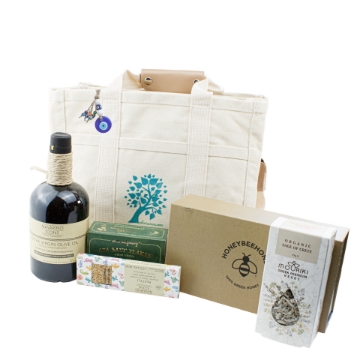
Greece in a Bag – Handcrafted Gourmet Hamper with Canvas Elegance

EL1913
Discover the Authentic Greek Gourmet Gift Basket, featuring handcrafted delights in a stylish canvas hamper. Perfect for food lovers and unique gifting!
£60.15 excl tax excluding shipping

A Cretan Journey - Olive Oil, Honey, Pasta, Tea & Plush

EL2096
A five-item Cretan gift box with organic stone-milled olive oil, fennel pasta, organic thyme honey, a mountain-tea herbal blend and a 30 cm donkey plush. Presented in a white magnetic 22 × 22 × 22 cm box.
£58.00 excl tax excluding shipping

Hellas Meze Aegean Sea Sardines in Vegetable Oil, 90 g

EL2108
Greek sardines in soybean oil, with salt, in a 90 g pack. This sterilized, ready-to-serve product contains 72% Sardina pilchardus sardines and has a drained weight of 65 g.
£2.75 excl tax excluding shipping

Maggiri Cretan Striftaria with Fennel & Olive Oil, 250g

EL2089
Traditional Cretan striftaria infused with wild fennel and olive oil. Hand-shaped twisted pasta from Heraklion, ready in 3–5 minutes. Vegan, no additives.
£7.57 excl tax excluding shipping
equates to £30.29 per 1 kg(s)